热带病与寄生虫学 ›› 2026, Vol. 24 ›› Issue (4): 204-208.doi: 10.20199/j.issn.1672-2302.2026.04.003

• 布鲁氏菌病防控专题 • 上一篇    下一篇

2015—2025年内蒙古自治区人间布鲁氏菌病流行特征分析

王虎虎1(), 王兆南2, 高永明1, 刘慧慧3   

  1. 1 内蒙古自治区疾病预防控制中心, 内蒙古呼和浩特 010081
    2 北京市朝阳区疾病预防控制中心
    3 中国疾病预防控制中心
  • 收稿日期:2026-06-11 出版日期:2026-08-20 发布日期:2026-09-29
  • 作者简介:王虎虎,男,硕士,统计师,研究方向:疾病监测、空间统计。E-mail: 1029802491@qq.com

Epidemiological characteristics of human brucellosis in Inner Mongolia Autonomous Region from 2015 to 2025

WANG Huhu1(), WANG Zhaonan2, GAO Yongming1, LIU Huihui3   

  1. 1 Inner Mongolia Autonomous Region Center for Disease Control and Prevention, Hohhot 010081, Inner Mongolia Autonomous Region, China
    2 Chaoyang District Center for Disease Prevention and Control of Beijing Municipality
    3 Chinese Center for Disease Control and Prevention
  • Received:2026-06-11 Online:2026-08-20 Published:2026-09-29

摘要:

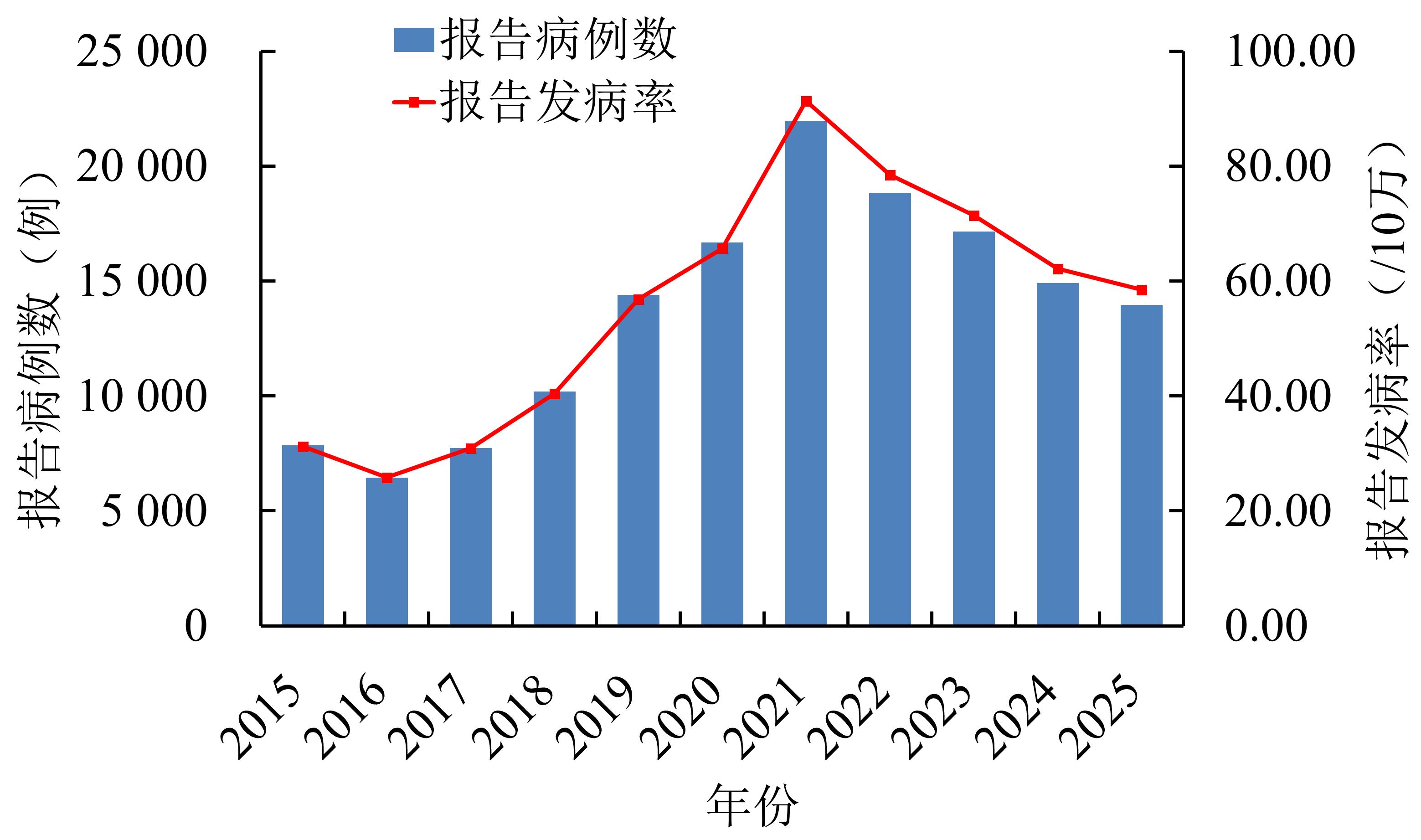
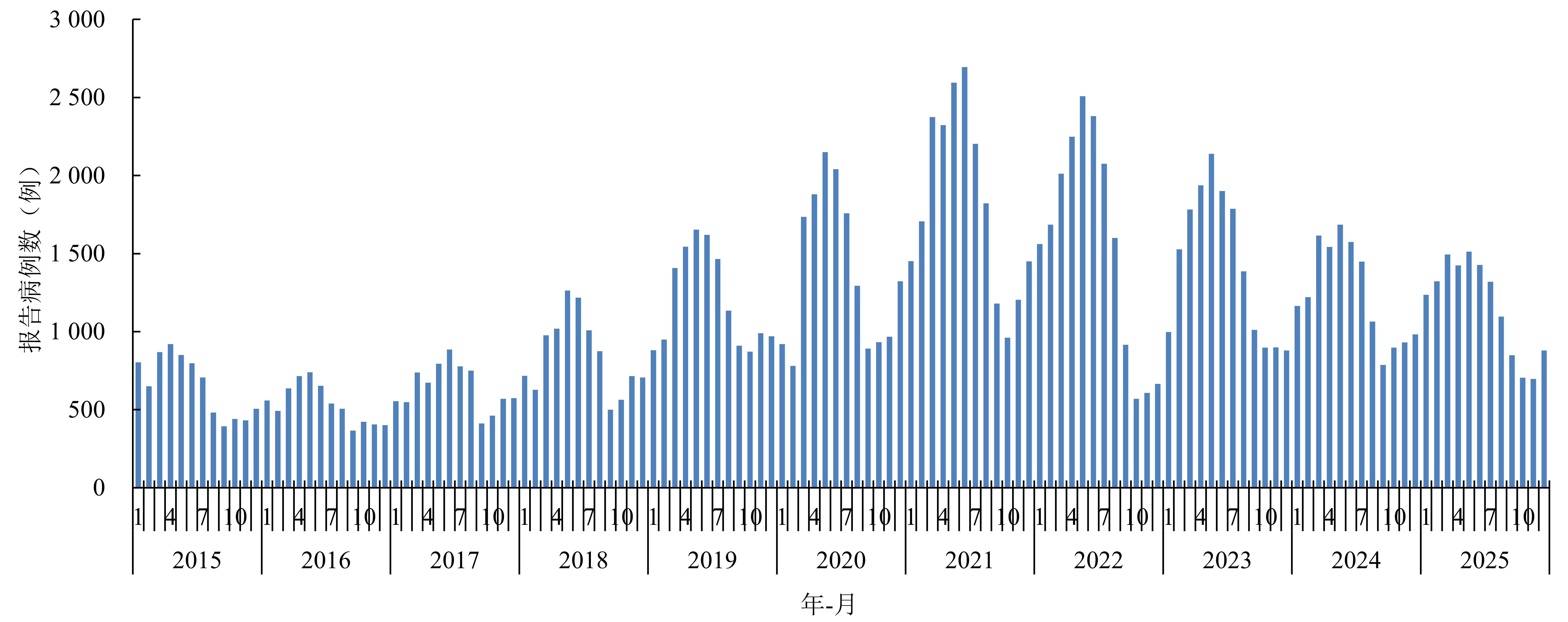
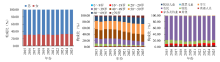
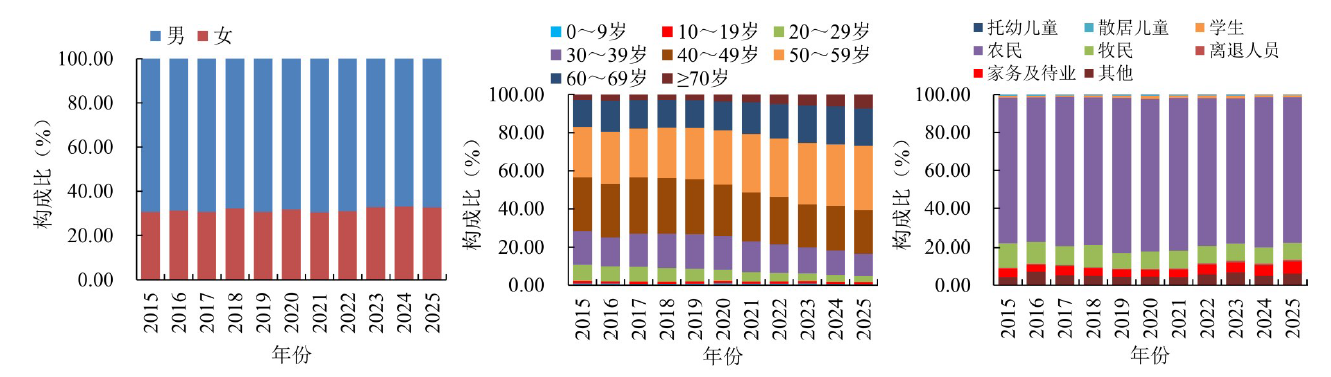
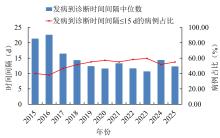
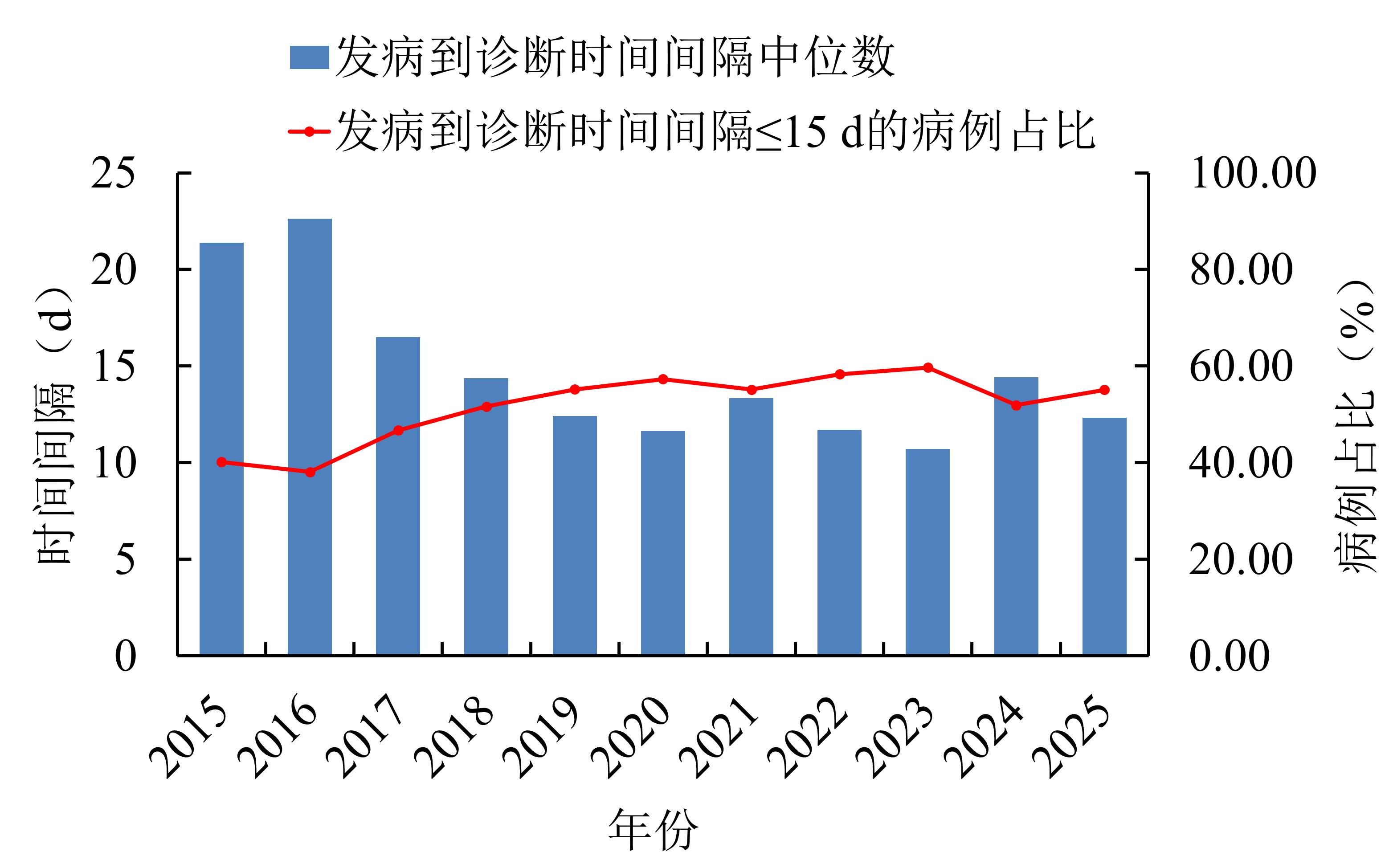
目的 掌握内蒙古自治区人间布鲁氏菌病(简称布病)流行病学特征及其变化趋势,为制定防控措施提供依据。方法 通过中国疾病预防控制信息系统收集2015—2025年内蒙古自治区布病发病情况资料,采用描述流行病学方法分析内蒙古自治区布病三间分布特征,应用SaTScan 9.4软件进行时空扫描分析,采用Joinpoint回归分析进行时间趋势分析。结果 2015—2025年,内蒙古自治区共报告布病150 092例,年均报告发病率为55.48/10万,无死亡病例。Joinpoint回归分析显示,2015—2025年内蒙古自治区布病报告发病率总体呈上升趋势(AAPC=8.35%,t=3.79,P<0.05),其中2015—2017年趋势无统计学意义(APC=1.80%,t=0.40,P>0.05),2017—2021年呈上升趋势(APC=31.50%,t=13.90,P<0.05),2021—2025年呈下降趋势(APC=-10.90%,t=-5.65,P<0.05)。高发期为4—8月,报告病例数占52.24%(78 410/150 092)。男、女报告病例数分别为102 731例和47 361例,性别比为2.17∶1;年龄以30~69岁年龄段为主(占88.17%,132 338/150 092);职业以农民为主(占77.87%,116 884/150 092),其次是牧民(占9.56%,14 354/150 092)。东部地区年均报告发病率(66.01/10万)高于西部地区(43.53/10万);时空聚集性分析共发现5个高风险聚集区域,涉及旗(县、区)32个。发病到诊断时间间隔中位数为13.42(4.38, 31.71)d,总体呈下降趋势(AAPC=-7.31%,t=-3.49,P<0.05);时间间隔≤15 d的病例占比总体呈上升趋势(AAPC=7.45%,t=3.54,P<0.05)。结论 内蒙古自治区布病发病总体呈上升趋势,建议强化部门间的联防联控机制,采取综合性防治措施进一步控制布病的流行。

关键词: 人间布鲁氏菌病, 流行特征, 发病趋势, 时空聚集性, 内蒙古自治区

Abstract:

ObjectiveTo characterize the epidemiological patterns and temporal trends of human brucellosis in Inner Mongolia Autonomous Region for evidence for developing corresponding prevention and control strategies. Methods Individual case data of human brucellosis reported in Inner Mongolia from 2015 to 2025 were retrieved from the Chinese Disease Control and Prevention Information System. Descriptive epidemiological methods were used to analyze the characteristics of temporal, regional and population distribution. The SaTScan 9.4 software was applied for spatiotemporal scan statistics, and Joinpoint regression was used to assess temporal trends. Results From 2015 to 2025, a total of 150 092 human brucellosis cases were reported in Inner Mongolia Autonomous Region, with an average annual reported incidence of 55.48/100 000. No deaths occurred. Joinpoint regression analysis revealed an overall upward trend in the reported incidence of human brucellosis in Inner Mongolia from 2015 to 2025 (AAPC=8.35%, t=3.79, P<0.05), during which the trend from 2015 to 2017 was not statistically significant (APC=1.80%, t=0.40, P>0.05), yet a significant increase was observed from 2017 to 2021 (APC=31.50%, t=13.90, P<0.05), and a significant decrease occurred from 2021 to 2025 (APC=-10.90%, t=-5.65, P<0.05). The peak incidence period was from April to August, accounting for 52.24% (78 410/150 092) of all cases. The number of reported cases was 102 731 for males and 47 361 for females, with a male-to-female ratio of 2.17∶1. The majority of cases were seen in the population aged 30-69 years (88.17%, 132 338/150 092). Farmers constituted the predominant occupation (77.87%, 116 884/150 092), followed by herders (9.56%, 14 354/150 092). The average annual reported incidence in eastern Inner Mongolia (66.01/100 000) was higher than that in western regions (43.53/100 000). Spatiotemporal clustering analysis identified five high-risk clusters, involving 32 banners/counties/districts. The median interval from symptom onset to diagnosis was 13.42 (4.38, 31.71) days, showing an overall downward trend (AAPC=-7.31%, t=-3.49, P<0.05). The proportion of cases with an interval ≤15 days showed an overall upward trend (AAPC=7.45%, t=3.54, P<0.05). Conclusion The incidence of human brucellosis in Inner Mongolia Autonomous Region shows an overall upward trend, for which our recommendation is to strengthen the inter-departmental joint prevention and control mechanisms as well as take comprehensive prevention and control measures to further contain the epidemic.

Key words: Human brucellosis, Epidemiological characteristics, Incidence trend, Spatiotemporal clustering, Inner Mongolia Autonomous Region

中图分类号: