
热带病与寄生虫学 ›› 2026, Vol. 24 ›› Issue (3): 129-134,148.doi: 10.20199/j.issn.1672-2302.2026.03.001
岳玉娟( ), 赵春春, 任东升
收稿日期:2026-04-18
出版日期:2026-06-20
发布日期:2026-07-31
作者简介:岳玉娟,女,博士,副研究员,研究方向:3S技术与公共卫生。E-mail: 基金资助:
YUE Yujuan(), ZHAO Chunchun, REN Dongsheng
Received:2026-04-18
Online:2026-06-20
Published:2026-07-31
摘要:
目的 了解我国重点蚊媒传染病死亡病例的流行特征,为蚊媒传染病防控提供参考。方法 收集2005—2025年中国疾病预防控制信息系统中全国报告的登革热、疟疾和流行性乙型脑炎(简称乙脑)死亡病例数据,采用描述流行病学方法分析其时间、地区、人群分布特征以及发病、诊断、死亡的时间间隔。结果 2005—2025年,全国共报告登革热、疟疾和乙脑病例431 542例,死亡2 312例,死亡病例数整体波动下降。其中,登革热152 739例,死亡15例(病死率为0.01%);疟疾239 371例,死亡361例(病死率为0.15%);乙脑39 432例,死亡1 936例(病死率为4.91%)。时间分布上,登革热死亡病例集中在8—10月(占86.67%);疟疾死亡病例无明显季节性特征;乙脑死亡病例集中在6—9月(占96.07%)。地区分布上,登革热死亡病例以广东省最多(11例,占73.33%),疟疾死亡病例以云南省最多(93例,占25.76%),乙脑死亡病例以贵州省最多(284例,占14.67%)。人群分布上,登革热死亡病例集中在40岁及以上年龄组(13例,占86.67%),主要为家务及待业(4例,占26.67%)、离退人员(3例,占20.00%);疟疾死亡病例中,男性远多于女性(11.03∶1),集中在30~59岁年龄组(274例,占75.90%),农民(126例,占34.90%)、民工(56例,占15.51%)和工人(53例,占14.68%)占比较高;乙脑死亡病例集中在0~9岁年龄组(1 112例,占57.44%),散居儿童(765例,占39.51%)、农民(474例,占24.48%)、学生(409例,占21.13%)占比较高。三种疾病发病至死亡时间间隔中位数均为7天。结论 我国重点蚊媒传染病死亡病例总体呈下降趋势,登革热死亡呈偶发、少发特征,疟疾和乙脑死亡得到有效控制。建议针对重点蚊媒传染病持续加强监测预警、媒介控制、病例救治及健康宣教,以进一步减轻蚊媒传染病的死亡危害。
中图分类号:
岳玉娟, 赵春春, 任东升. 2005—2025年我国重点蚊媒传染病死亡病例流行特征分析[J]. 热带病与寄生虫学, 2026, 24(3): 129-134,148.
YUE Yujuan, ZHAO Chunchun, REN Dongsheng. Epidemic characteristics of deaths from major mosquito-borne infectious diseases in China, 2005-2025[J]. Journal of Tropical Diseases and Parasitology, 2026, 24(3): 129-134,148.
表1
2005—2025年全国登革热、疟疾、乙脑死亡病例报告情况
| 年份 | 死亡病例数(例) | |||
|---|---|---|---|---|
| 登革热 | 疟疾 | 乙脑 | 合计 | |
| 2005 | 1 | 46 | 214 | 261 |
| 2006 | 0 | 35 | 466 | 501 |
| 2007 | 0 | 17 | 234 | 251 |
| 2008 | 0 | 22 | 150 | 172 |
| 2009 | 0 | 11 | 175 | 186 |
| 2010 | 0 | 18 | 102 | 120 |
| 2011 | 0 | 30 | 71 | 101 |
| 2012 | 0 | 16 | 60 | 76 |
| 2013 | 0 | 20 | 70 | 90 |
| 2014 | 6 | 24 | 30 | 60 |
| 2015 | 0 | 21 | 19 | 40 |
| 2016 | 0 | 15 | 56 | 71 |
| 2017 | 2 | 7 | 87 | 96 |
| 2018 | 1 | 9 | 152 | 162 |
| 2019 | 3 | 17 | 13 | 33 |
| 2020 | 0 | 6 | 9 | 15 |
| 2021 | 0 | 3 | 6 | 9 |
| 2022 | 0 | 6 | 3 | 9 |
| 2023 | 1 | 12 | 8 | 21 |
| 2024 | 0 | 15 | 2 | 17 |
| 2025 | 1 | 11 | 9 | 21 |
| 合计 | 15 | 361 | 1 936 | 2 312 |
表2
2005—2025年全国登革热、疟疾、乙脑死亡病例月份分布
| 月份 | 死亡病例数(例) | |||
|---|---|---|---|---|
| 登革热 | 疟疾 | 乙脑 | 合计 | |
| 1 | 0 | 49 | 0 | 49 |
| 2 | 0 | 23 | 0 | 23 |
| 3 | 0 | 20 | 0 | 20 |
| 4 | 0 | 16 | 2 | 18 |
| 5 | 0 | 44 | 29 | 73 |
| 6 | 2 | 56 | 191 | 249 |
| 7 | 0 | 28 | 708 | 736 |
| 8 | 2 | 26 | 736 | 764 |
| 9 | 8 | 17 | 225 | 250 |
| 10 | 3 | 35 | 37 | 75 |
| 11 | 0 | 28 | 6 | 34 |
| 12 | 0 | 19 | 2 | 21 |
表3
2005—2025年全国登革热、疟疾、乙脑死亡病例地区分布
| 省份 | 死亡病例数(例) | 省份 | 死亡病例数(例) | |||||||
|---|---|---|---|---|---|---|---|---|---|---|
| 登革热 | 疟疾 | 乙脑 | 合计 | 登革热 | 疟疾 | 乙脑 | 合计 | |||
| 北京 | 0 | 10 | 11 | 21 | 河南 | 1 | 27 | 193 | 221 | |
| 天津 | 0 | 1 | 6 | 7 | 湖北 | 0 | 12 | 36 | 48 | |
| 河北 | 0 | 5 | 20 | 25 | 湖南 | 1 | 14 | 86 | 101 | |
| 山西 | 0 | 0 | 96 | 96 | 广东 | 11 | 25 | 50 | 86 | |
| 内蒙古 | 0 | 4 | 3 | 7 | 广西 | 0 | 9 | 67 | 76 | |
| 辽宁 | 0 | 12 | 15 | 27 | 海南 | 0 | 2 | 4 | 6 | |
| 吉林 | 0 | 6 | 0 | 6 | 重庆 | 1 | 6 | 80 | 87 | |
| 黑龙江 | 0 | 1 | 1 | 2 | 四川 | 0 | 33 | 216 | 249 | |
| 上海 | 1 | 8 | 5 | 14 | 贵州 | 0 | 5 | 284 | 289 | |
| 江苏 | 0 | 12 | 27 | 39 | 云南 | 0 | 93 | 236 | 329 | |
| 浙江 | 0 | 10 | 43 | 53 | 西藏 | 0 | 0 | 1 | 1 | |
| 安徽 | 0 | 11 | 58 | 69 | 陕西 | 0 | 7 | 77 | 84 | |
| 福建 | 0 | 14 | 16 | 30 | 甘肃 | 0 | 2 | 123 | 125 | |
| 江西 | 0 | 3 | 33 | 36 | 宁夏 | 0 | 1 | 49 | 50 | |
| 山东 | 0 | 25 | 100 | 125 | 新疆 | 0 | 3 | 0 | 3 | |
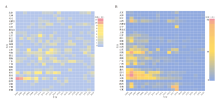
图1
2005—2025年不同省份疟疾、乙脑死亡病例数热力图 注:A为疟疾死亡病例;B为乙脑死亡病例。
表4
2005—2025年全国登革热、疟疾、乙脑死亡病例人群分布
| 特征 | 死亡病例(例) | |||
|---|---|---|---|---|
| 登革热 | 疟疾 | 乙脑 | 合计 | |
| 性别 | ||||
| 男性 | 7 | 331 | 1 100 | 1 438 |
| 女性 | 8 | 30 | 836 | 874 |
| 年龄组(岁) | ||||
| 0~9 | 0 | 1 | 1 112 | 1 113 |
| 10~19 | 0 | 15 | 192 | 207 |
| 20~29 | 2 | 54 | 51 | 107 |
| 30~39 | 0 | 82 | 50 | 132 |
| 40~49 | 4 | 117 | 76 | 197 |
| 50~59 | 2 | 75 | 137 | 214 |
| 60~69 | 3 | 11 | 169 | 183 |
| 70~79 | 2 | 3 | 128 | 133 |
| ≥80 | 2 | 3 | 21 | 26 |
| 职业 | ||||
| 农民 | 2 | 126 | 474 | 602 |
| 离退人员 | 3 | 3 | 54 | 60 |
| 家务及待业 | 4 | 22 | 34 | 60 |
| 散居儿童 | 0 | 0 | 765 | 765 |
| 工人 | 1 | 53 | 29 | 83 |
| 民工 | 0 | 56 | 23 | 79 |
| 商业服务 | 2 | 26 | 3 | 31 |
| 干部职员 | 0 | 23 | 2 | 25 |
| 学生 | 0 | 5 | 409 | 414 |
| 幼托儿童 | 0 | 0 | 107 | 107 |
| 其他 | 3 | 47 | 36 | 86 |
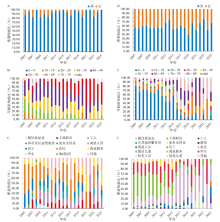
图2
2005—2025年全国疟疾、乙脑死亡病例的性别、年龄、职业构成比变化 注:A~C为疟疾死亡病例;D~F为乙脑死亡病例。

| [1] | 吴荣泉, 彭晓丽, 郑玉群, 等. 蚊虫分类学研究概况[J]. 口岸非传统安全学刊, 2025, 2(3):72-75. |
| [2] | 王涛. 中国蚊和蚊媒病毒的空间分布及预测研究[D]. 北京: 军事科学院, 2022. |
| [3] | 全国人民代表大会常务委员会. 中华人民共和国传染病防治法[J]. 中华人民共和国全国人民代表大会常务委员会公报, 2025(3):355-374. |
| [4] |
Guzman MG, Harris E. Dengue[J]. Lancet, 2015, 385(9966):453-465.
doi: 10.1016/S0140-6736(14)60572-9 pmid: 25230594 |
| [5] | 中华人民共和国国家卫生和计划生育委员会. 登革热诊断[S/OL]. [2026-04-07]. https://www.nhc.gov.cn/wjw/s9491/201803/d524df26df28453eada8371dc3565818.shtml. |
| [6] |
Sang SW, Chen B, Wu HX, et al. Dengue is still an imported disease in China: a case study in Guangzhou[J]. Infect Genet Evol, 2015, 32:178-190.
doi: 10.1016/j.meegid.2015.03.005 pmid: 25772205 |
| [7] | World Health Organization. Malaria[EB/OL]. [2026-04-07]. https://www.who.int/health-topics/malaria#tab=tab_1. |
| [8] |
张丽, 尹建海, 夏志贵. 中国消除疟疾后输入性疟疾突发聚集性疫情的风险和应对[J]. 中国热带医学, 2023, 23(6):585-589.
doi: 10.13604/j.cnki.46-1064/r.2023.06.05 |
| [9] |
Peter M, Veasna D, Sebastien B, et al. The ecology and evolution of Japanese encephalitis virus[J]. Pathogens, 10(12):1534.
doi: 10.3390/pathogens10121534 URL |
| [10] |
Campbell G, Hills S, Fischer M, et al. Estimated global incidence of Japanese encephalitis: systematic review[J]. Bull World Health Organ, 2011, 89(10):766-774.
doi: 10.2471/BLT.00.000000 URL |
| [11] |
Turtle L, Solomon T. Japanese encephalitis - the prospects for new treatments[J]. Nat Rev Neurol, 2018, 14(5):298-313.
doi: 10.1038/nrneurol.2018.30 pmid: 29697099 |
| [12] |
Harshani H, Abeynayake J. Japanese Encephalitis in Asia: A comprehensive review[J]. J Vector Borne Dis, 2025, 62(4):398-407.
doi: 10.4103/jvbd.jvbd_167_24 URL |
| [13] | World Health Organization. Dengue-and-severe-dengue[EB/OL]. [2026-04-07]. https://www.who.int/health-topics/dengue-and-severe-dengue#tab=tab_2. |
| [14] | 马有辉, 范智鹏. 我国消除疟疾后输入性疟疾现状及应对策略展望[J]. 中国口岸科学技术, 2023, 5(5):21-26. |
| [15] |
Shi TS, Meng L, Li DH, et al. Effect of different vaccine strategies for the control of Japanese encephalitis in Chinese mainland from 1961 to 2020: a quantitative analysis[J]. Vaccine, 2022, 40(43):6243-6254.
doi: 10.1016/j.vaccine.2022.09.030 URL |
| [16] |
Zhang XS, Jin N, Tu AX, et al. Adults in Northwest China experienced the largest outbreak of Japanese encephalitis in history 10 years after the Japanese encephalitis vaccine was included in the national immunization program: a retrospective epidemiological study[J]. J Med Virol, 2023, 95(5):e28782.
doi: 10.1002/jmv.v95.5 URL |
| [17] | 金娜, 张晓曙, 董茂星, 等. 甘肃省2005-2019年流行性乙型脑炎时空分布特征[J]. 中国疫苗和免疫, 2020, 26(4):411-416. |
| [18] |
Yue YJ, Sun JM, Liu XB, et al. Spatial analysis of dengue fever and exploration of its environmental and socio-economic risk factors using ordinary least squares: a case study in five districts of Guangzhou City, China, 2014[J]. Int J Infect Dis, 2018, 75:39-48.
doi: S1201-9712(18)34484-9 pmid: 30121308 |
| [19] | 姜澒月. 河南省流行性乙型脑炎的地理流行规律及其影响因素探究[D]. 北京: 中国科学院大学, 2016. |
| [20] | 林洁, 梁也, 黄英财, 等. 2011-2021年我国输入性疟疾分析[J]. 中国口岸科学技术, 2024, 6(增刊1):55-58. |
| [21] | 岳玉娟, 刘小波, 任东升, 等. 中国大陆2005-2020年登革热流行病学特征分析[J]. 中国媒介生物学及控制杂志, 2023, 34(6):761-766,818. |
| [22] | World Health Organization Western Pacific Region. Dengue Situation Update 688: Update on the Dengue situation in the Western Pacific Region[R]. WHO Western Pacific Regional Office, 2024. |
| [23] | 岳玉娟, 任东升. 2024年中国登革热流行病学特征及输入病例时空流动特征分析[J]. 疾病监测, 2025, 40(11):1423-1427. |
| [24] |
Yue YJ, Lun XC, Zhao CC, et al. Dengue situation in Chinese mainland, 2023[J]. BMC Public Health, 2025, 25(1):2773.
doi: 10.1186/s12889-025-24151-8 |
| [25] | 邓淑珍, 华聪, 王仕莲, 等. 2000-2023年云南省流行性乙型脑炎流行特征及时空聚集分析[J]. 中华实验和临床病毒学杂志, 2024, 38(6):642-648. |
| [26] | 谢玲玉. 2005年-2015年普洱市乙脑流行特征分析[J]. 医药前沿, 2017, 7(3):386-387. |
| [27] | 宋群锋, 陶沁, 余春, 等. 贵州省1997-2004年流行性乙型脑炎流行病学分析及控制策略[J]. 现代预防医学, 2006, 33(9):1656-1662. |
| [1] | 朱民, 张宸罡, 王真瑜, 张耀光, 陈健, 余晴. 上海市消除疟疾后防控能力调查分析[J]. 热带病与寄生虫学, 2026, 24(3): 149-152,165. |
| [2] | 韦振明, 周清, 庞嬿, 梁春香, 陆路, 梁浩, 黄虞远. 2025年南宁市青秀区基孔肯雅热疫情特征与应急处置分析[J]. 热带病与寄生虫学, 2026, 24(3): 153-158. |
| [3] | 鲁周琴, 张正斌, 吴刚, 王晓君, 王坚杰, 周美兰, 李涛, 杜昕, 李月华. 2010—2025年武汉市老年人群肺结核流行特征及变化趋势[J]. 热带病与寄生虫学, 2026, 24(3): 177-182. |
| [4] | 岳玉娟, 李贵昌, 吾力肯·吐尔达力. 2006—2025年我国恙虫病死亡病例流行特征分析[J]. 热带病与寄生虫学, 2026, 24(2): 65-69,75. |
| [5] | 帕孜丽亚·艾尼, 依帕尔·艾海提, 王森路, 王明哲, 王乐, 珠丽德孜·巴衣别克, 刘年强. 2005—2024年新疆维吾尔自治区学生和教师肺结核发病趋势分析[J]. 热带病与寄生虫学, 2026, 24(2): 70-75. |
| [6] | 李鹃, 张影坤, 崔哲哲, 黄敏莹, 黄全将, 梁小烟, 周凌云. 2020—2024年广西壮族自治区学生肺结核流行特征及跨区域就诊情况分析[J]. 热带病与寄生虫学, 2026, 24(2): 76-79,114. |
| [7] | 沈若寒, 宋杨, 刘凤凤, 孟欣, 郑灿军, 孙军玲, 王丽萍, 张彦平, 常昭瑞. 2005―2024年中国伤寒和副伤寒流行特征及发病趋势分析[J]. 热带病与寄生虫学, 2026, 24(2): 96-104. |
| [8] | 华华, 包名家, 王妍, 闫俊, 唐鹭. 2005—2024年黑龙江省其他感染性腹泻流行特征与病原学分析[J]. 热带病与寄生虫学, 2026, 24(1): 13-18. |
| [9] | 王周超, 金美玲, 宋歌, 孙思浓, 毛玲玲, 孙英伟. 2015—2024年辽宁省其他感染性腹泻流行特征及空间聚集性分析[J]. 热带病与寄生虫学, 2026, 24(1): 19-24. |
| [10] | 陈皓东, 赵俊岭, 董言, 刘万里, 努尔比亚·艾尔肯, 郭荣. 2015—2024年新疆维吾尔自治区其他感染性腹泻流行特征与病原学分析[J]. 热带病与寄生虫学, 2026, 24(1): 25-29. |
| [11] | 陶金, 章静, 豆正东, 张协钰, 陶显庆, 方艳姣. 2015—2024年芜湖市梅毒流行特征及趋势分析[J]. 热带病与寄生虫学, 2026, 24(1): 41-46. |
| [12] | 张力芹, 龚磊, 刘雅倩, 戴艳妮, 耿浩翔, 孟梦, 吴家兵. 基孔肯雅热流行、诊疗与防控措施研究进展[J]. 热带病与寄生虫学, 2026, 24(1): 58-64. |
| [13] | 文雅欣, 李锦浩, 葛芳君, 胡冬梅, 徐彩红. 2021—2024年我国65岁及以上老年无症状结核病登记情况分析[J]. 热带病与寄生虫学, 2025, 23(6): 330-334. |
| [14] | 葛芳君, 文雅欣, 李锦浩, 徐彩红. 2021—2024年我国0~14岁儿童无症状结核病登记情况分析[J]. 热带病与寄生虫学, 2025, 23(6): 335-340. |
| [15] | 祖丽呼玛尔·艾尔肯, 凯丽比努尔·吾买尔, 古扎丽努尔·艾则孜, 麦吾兰·帕热哈提, 董晓, 王明哲, 刘年强. 2018—2024年新疆维吾尔自治区肺结核合并糖尿病患者流行特征及影响因素分析[J]. 热带病与寄生虫学, 2025, 23(6): 348-352. |
| 阅读次数 | ||||||
|
全文 |
|
|||||
|
摘要 |
|
|||||
