热带病与寄生虫学 ›› 2026, Vol. 24 ›› Issue (1): 25-29.doi: 10.20199/j.issn.1672-2302.2026.01.005

• 其他感染性腹泻防控专题 • 上一篇    下一篇

2015—2024年新疆维吾尔自治区其他感染性腹泻流行特征与病原学分析

陈皓东1(), 赵俊岭1, 董言2, 刘万里2, 努尔比亚·艾尔肯2, 郭荣2()   

  1. 1 新疆医科大学公共卫生学院新疆乌鲁木齐 830017
    2 新疆维吾尔自治区疾病预防控制中心
  • 收稿日期:2025-08-01 出版日期:2026-02-20 发布日期:2026-03-31
  • 通信作者: 郭荣,E-mail: 648228927@qq.com
  • 作者简介:陈皓东,男,硕士在读,研究方向:致泻性大肠埃希菌。E-mail: 1186945797@qq.com
  • 基金资助:
    新疆维吾尔自治区自然科学基金项目(2021D01C127)

Epidemiological characteristics and etioloty of other infectious diarrhea in Xinjiang Uygur Autonomous Region from 2015 to 2024

CHEN Haodong1(), ZHAO Junling1, DONG Yan2, LIU Wanli2, NUERBIYA Aierken2, GUO Rong2()   

  1. 1 School of Public Health, Xinjiang Medical University, Urumqi 830017, Xinjiang Uygur Autonomous Region, China
    2 Xinjiang Uygur Autonomous Region Center for Disease Control and Prevention
  • Received:2025-08-01 Online:2026-02-20 Published:2026-03-31
  • Contact: GUO Rong, E-mail: 648228927@qq.com

摘要:

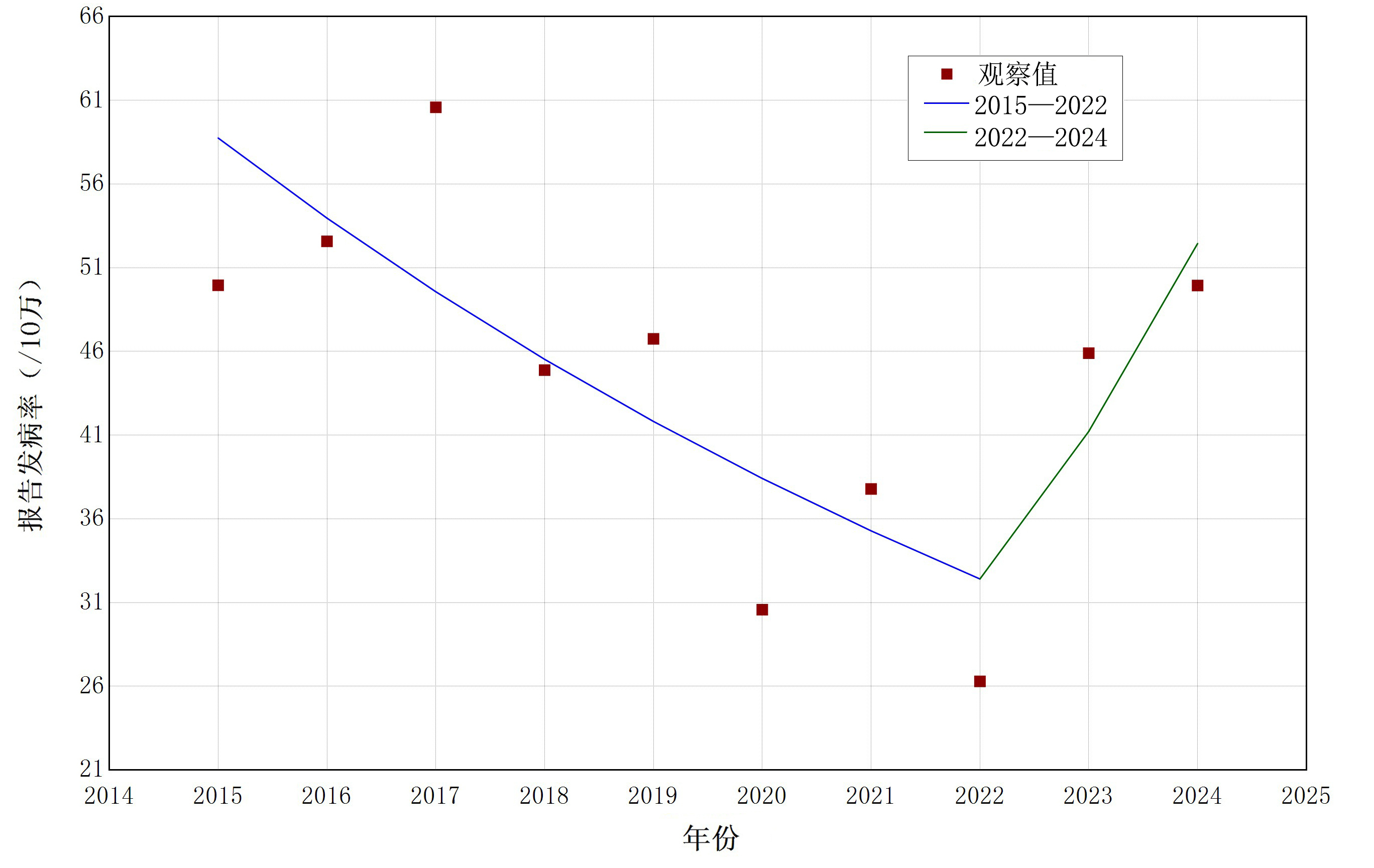
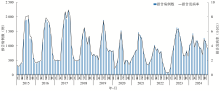
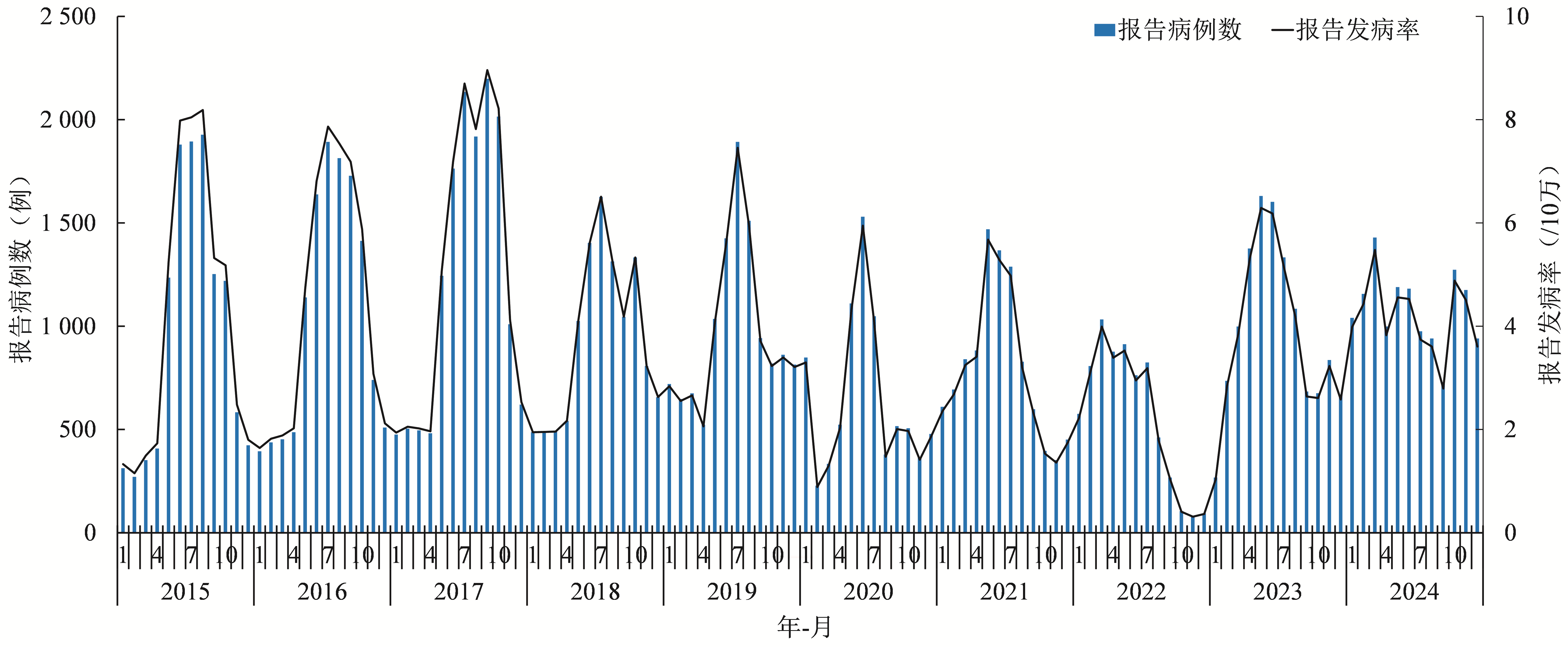
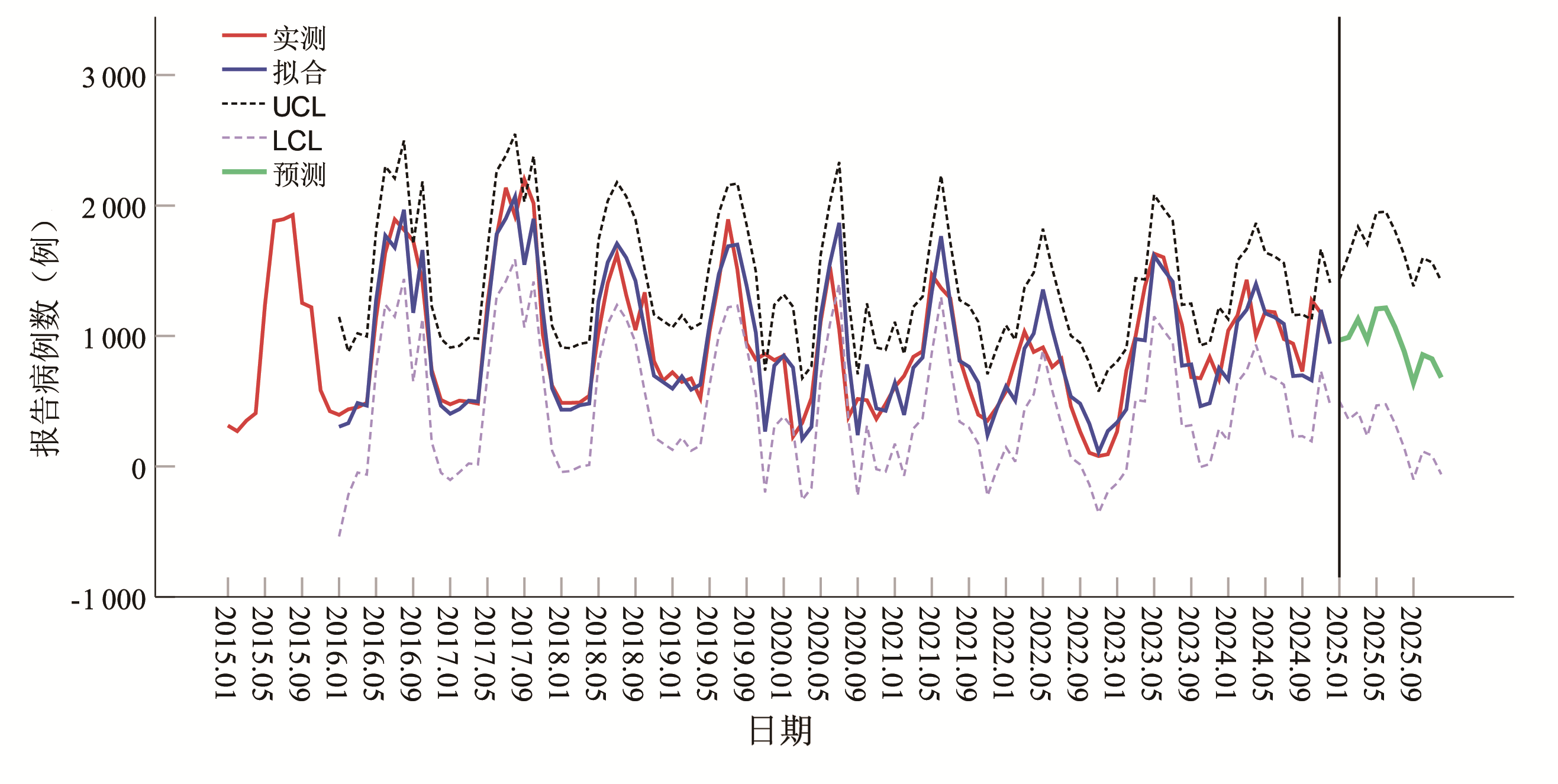
目的 分析新疆维吾尔自治区其他感染性腹泻的流行特征,为当地制定防治措施提供科学依据。方法 从中国疾病预防控制信息系统获取2015—2024年新疆其他感染性腹泻的病例资料,采用描述流行病学方法分析报告病例的三间分布和病原学特征,使用Joinpoint回归模型分析发病率变化趋势,构建自回归移动平均(autoregressive integrated moving average, ARIMA)时间序列模型预测2025年新疆其他感染性腹泻发病情况。结果 2015—2024年新疆累计报告其他感染性腹泻111 773例,年均报告发病率为44.34/10万。Joinpoint回归模型显示,2015—2024年报告发病率总体趋势无统计学意义(AAPC=-2.97%,95%CI:-11.22%~9.83%,t=-1.27,P>0.05),其中2015—2022年报告发病率呈下降趋势(APC=-8.15%,95%CI:-15.28%~0.41%,t=-2.70,P<0.05)。男、女报告病例数分别为61 812例和49 961例,性别比为1.24∶1,年均报告发病率分别为46.29/10万、39.98/10万;年龄主要集中在5岁及以下(73 475例,占65.74%);职业以散居儿童为主(69 254例,占61.96%),其后为农民(14 718例,占13.17%)。病例报告主要集中在5—8月(53 656例,占48.00%)。报告发病率居前3位的地区分别是乌鲁木齐市(85.34/10万)、克孜勒苏柯尔克孜自治州(69.56/10万)和巴音郭楞蒙古自治州(59.78/10万)。明确病原学诊断的病例共20 110例,病原体以病毒为主(18 855例,占93.76%),主要为轮状病毒感染(16 508例,占82.09%)。时间序列分析的建模结果为ARIMA(3,0,0)(0,1,1)12模型,预测2025年报告病例数(95%CI)为11 440(2 966~19 886)例。结论 2015—2024年新疆地区其他感染性腹泻报告发病率整体呈先下降后上升的趋势,高发季节为夏季,5岁及以下婴幼儿是重点防控对象,需加强监测并针对重点人群采取防控措施。

关键词: 其他感染性腹泻, 流行特征, Joinpoint回归模型, 自回归移动平均模型, 新疆维吾尔自治区

Abstract:

Objective To analyze the epidemiological characteristics of other infectious diarrhea in Xinjiang Uygur Autonomous Region for a scientific basis for the formulating prevention and control measures in the local area. Methods The case data of other infectious diarrhea in Xinjiang from 2015 to 2024 were obtained from the Chinese Disease Prevention and Control Information System. Descriptive epidemiological methods were used to analyze the temporal, regional and population distribution as well as the pathogens in the reported cases. The Joinpoint regression model was used to analyze the changing trend of incidence. An autoregressive integrated moving average (ARIMA) time series model was constructed to predict the incidence of other infectious diarrhea in Xinjiang in 2025. Results From 2015 to 2024, a total of 111 773 cases of other infectious diarrhea were reported in Xinjiang, with an average annual incidence rate of 44.34 per 100 000. The Joinpoint regression model showed that the overall trend of the reported incidence rate from 2015 to 2024 was not statistically significant (AAPC=-2.97%, 95%CI: -11.22%-9.83%, t=-1.27, P>0.05), yet a downward trend from 2015 to 2022 was observed (APC=-8.15%, 95%CI: -15.28%-0.41%, t=-2.70, P<0.05). There were 61 812 male cases and 49 961 female cases, with a sex ratio of 1.24∶1. The average annual reported incidence rates for males and females were 46.29 and 39.98 per 100 000, respectively. The age group mainly concentrated in those 5 years old and under (n=73 475; 65.74%). The majority of the cases were in children living at home (n=69 254; 61.96%),followed by farmers (n=14 718; 13.17%). The cases were most reported from May to August (n=53 656; 48.00%). The top three regions with the highest reported incidence rates were Urumqi City (85.34 per 100 000), Kizilsu Kirgiz Autonomous Prefecture (69.56 per 100 000), and Bayingolin Mongolian Autonomous Prefecture (59.78 per 100 000). A total of 20 110 cases were diagnosed with a clear pathogen, with viruses being the major pathogen (18 855 cases, 93.76%), in which rotavirus infection accounted for 82.09% (16 508 cases). The modeling result of the time series analysis was the ARIMA (3, 0, 0) (0, 1, 1)12 model, and the predicted number of reported cases in 2025 (95%CI) was 11 440 (2 966-19 886). Conclusion From 2015 to 2024, the reported incidence rate of other infectious diarrhea in Xinjiang showed an overall trend of decreasing initially and then increasing. The high-incidence season was summer, and infants and children 5 years old and under were the key population for prevention and control. It is necessary to strengthen monitoring and take targeted prevention and control measures for key these population groups.

Key words: Other infectious diarrhea, Epidemiological characteristics, Joinpoint regression model, Autoregressive integrated moving average (ARIMA) model, Xinjiang Uygur Autonomous Region

中图分类号: