Journal of Tropical Diseases and Parasitology ›› 2025, Vol. 23 ›› Issue (6): 348-352.

Previous Articles     Next Articles

Epidemiological characteristics and risk factors of pulmonary tuberculosis patients complicated with diabetes in Xinjiang Uygur Autonomous Region from 2018 to 2024

ZULIHUMAER Aierken1, 2, KAILIBINU’ER Wumaier1, GUZALINU’ER Aizezi1, MAIWULAN Parehati1,  DONG Xiao1, WANG Mingzhe1, LIU Nianqiang1#br#   

  1. 1. Center for Disease Control and Prevention of Xinjiang Uygur Autonomous Region, Urumqi 830002, Xinjiang Uygur Autonomous Region, China;  2. School of Public Health, Xinjiang Medical University
  • Received:2025-10-31 Online:2025-12-20 Published:2026-01-23

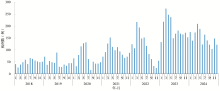
Abstract: Objective To analyze the epidemiological characteristics and risk factors for pulmonary tuberculosis with diabetes mellitus (PTB-DM) patients in Xinjiang for a scientific basis for following prevention and treatment of PTB-DM patients in the region. Methods The information of PTB-DM patients in Xinjiang from 2018 to 2024 were collected through the Chinese Disease Prevention and Control Information System. Descriptive epidemiological methods were used to analyze the epidemiological characteristics, and logistic regression model was used to identify influencing factors for PTB-DM. Results From 2018 to 2024, a total of 8 533 PTB-DM patients were registered in Xinjiang, accounting for 3.89% (8 533/219 199) of all pulmonary tuberculosis (PTB) cases. The proportion was increased from 0.81% (593/72 786) in 2018 to 10.42% (1 807/17 338) in 2024. By temporal distribution, more cases were registered from March to May (n=2 896; 33.94%). Geographically, the highest number of cases was reported in Kashgar area (n=2 667), and Changji Hui Autonomous Prefecture had the highest proportion of PTB-DM among PTB patients (14.77%). By population distribution, there were 4 611 males and 3 922 females (sex ratio 1.18∶1). The majority of cases were in patients aged ≥60 years (n=4 901; 57.44%), and the predominant occupation was associated with farmers (n=5 294; 62.04%). Among the patients, there were a relatively large number of etiologically positive cases (n=6 310; 73.95%). The majority of cases were identified through clinical symptomatic visits (n=6 673; 78.20%), and local residents (n=8 236; 96.52%) and treatment-naive patients (n=7 177; 84.11%) were predominant. In the PTB patients, higher proportions of PTB-DM were observed in the 31-59 age group (4.63%), retirees (15.79%), bacteriologically positive cases (6.18%), active screening cases (7.11%), floating residents (5.76%), and treatment-naive cases (4.01%). The results of multivariate logistic regression analysis revealed that the population aged 31-59 years old and ≥60 years old (OR=11.360, 95%CI: 9.296-13.882; OR=9.584, 95%CI: 7.830-11.732), those with a retired occupation (OR=1.761, 95%CI: 1.458-2.128) had a higher probability of developing PTB-DM. Conclusion The proportion of PTB-DM in Xinjiang is generally on the rise, with a relatively higher number of patients in the southern region. Middle-aged and elderly people, as well as retired individuals, had a higher probability of comorbidity. It is recommended to strengthen the bidirectional screening of PTB-DM in key areas and populations to achieve early detection and treatment of the disease.

Key words: Pulmonary tuberculosis, Diabetes mellitus, Epidemiological characteristics, Influencing factors, Xinjiang Uygur Autonomous Region 

CLC Number: