
热带病与寄生虫学 ›› 2026, Vol. 24 ›› Issue (2): 109-114.doi: 10.20199/j.issn.1672-2302.2026.02.009
王旗( ), 章乐生, 汪峰峰, 王毓洁, 李清越, 马晓荷, 操治国()
收稿日期:2026-01-13
出版日期:2026-04-20
发布日期:2026-05-29
通信作者:
操治国,E-mail: 作者简介:王旗,男,硕士,主管技师,研究方向:寄生虫病控制。E-mail: 基金资助:
WANG Qi(), ZHANG Lesheng, WANG Fengfeng, WANG Yujie, LI Qingyue, MA Xiaohe, CAO Zhiguo()
Received:2026-01-13
Online:2026-04-20
Published:2026-05-29
Contact:
CAO Zhiguo, E-mail: 摘要:
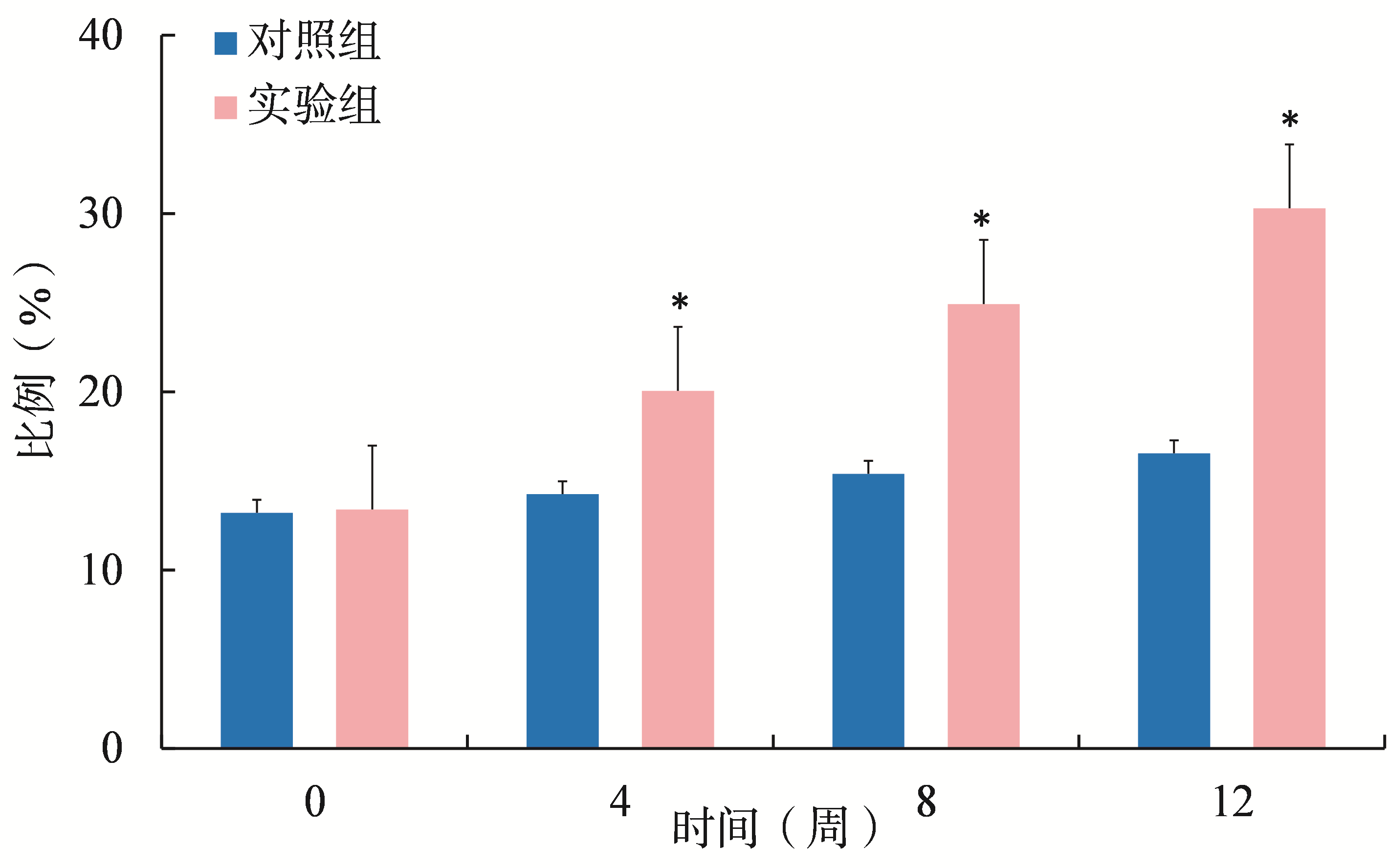
目的 观察日本血吸虫虫卵分泌抗原(excretory-secretory antigen of eggs, ESA)对小鼠脾脏调节性T细胞(regulatory T cells, Tregs)比例的影响及动态变化趋势,初步探讨其对小鼠免疫调节作用。方法 建立家兔日本血吸虫感染模型,从肝脏分离、纯化虫卵并制备日本血吸虫ESA,将40只SPF级雄性昆明鼠随机分为实验组和对照组,每组20只。用日本血吸虫ESA(实验组)和PBS(对照组)分别对两组小鼠进行4周干预,于免疫前和免疫后4周、8周、12周,采用流式细胞术检测小鼠脾脏中CD4+CD25+Foxp3+Tregs占CD4+T细胞的百分比,并结合小鼠体重和脾脏指数变化评估免疫反应。结果 ESA免疫后第8、12周,实验组小鼠体重(40.18 g±0.56 g、41.71 g±0.54 g)低于对照组(42.18 g±0.26 g、44.71 g±0.69 g),差异均有统计学意义(t=7.116、7.661,P均<0.01)。免疫后第4、8、12周,实验组小鼠脾脏指数(3.80 mg/g±0.04 mg/g、4.16 mg/g±0.02 mg/g、4.31 mg/g±0.03 mg/g)均高于对照组(3.57 mg/g±0.01 mg/g、3.58 mg/g±0.01 mg/g、3.59 mg/g±0.02 mg/g),差异均有统计学意义(t=-11.309、-58.881、-48.882,P均<0.01)。同时,实验组小鼠免疫后第4、8、12周脾脏Tregs占CD4+T细胞的比例(20.15%±1.01%、24.92%±1.06%、30.29%±1.06%)高于同期对照组(14.27%±0.66%、15.40%±0.86%、16.56%±0.86%),差异均有统计学意义(t=-10.343、-15.637、-22.494,P均<0.01),且随免疫时间延长占比逐渐上升。结论 ESA可诱导小鼠脾脏CD4+T细胞向Tregs分化,且该效应与免疫干预时间成正向关联。
中图分类号:
王旗, 章乐生, 汪峰峰, 王毓洁, 李清越, 马晓荷, 操治国. 日本血吸虫虫卵分泌抗原对小鼠脾CD4+CD25+Foxp3+调节性T细胞动态变化的研究[J]. 热带病与寄生虫学, 2026, 24(2): 109-114.
WANG Qi, ZHANG Lesheng, WANG Fengfeng, WANG Yujie, LI Qingyue, MA Xiaohe, CAO Zhiguo. Dynamic changes of splenic CD4+CD25+Foxp3+Tregs in mice induced by ESA of Schistosoma japonicum eggs[J]. Journal of Tropical Diseases and Parasitology, 2026, 24(2): 109-114.
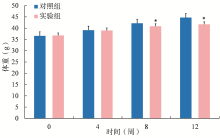
图1
实验组和对照组小鼠体重的动态变化 注:*表示实验组与对照组比较差异有统计学意义。
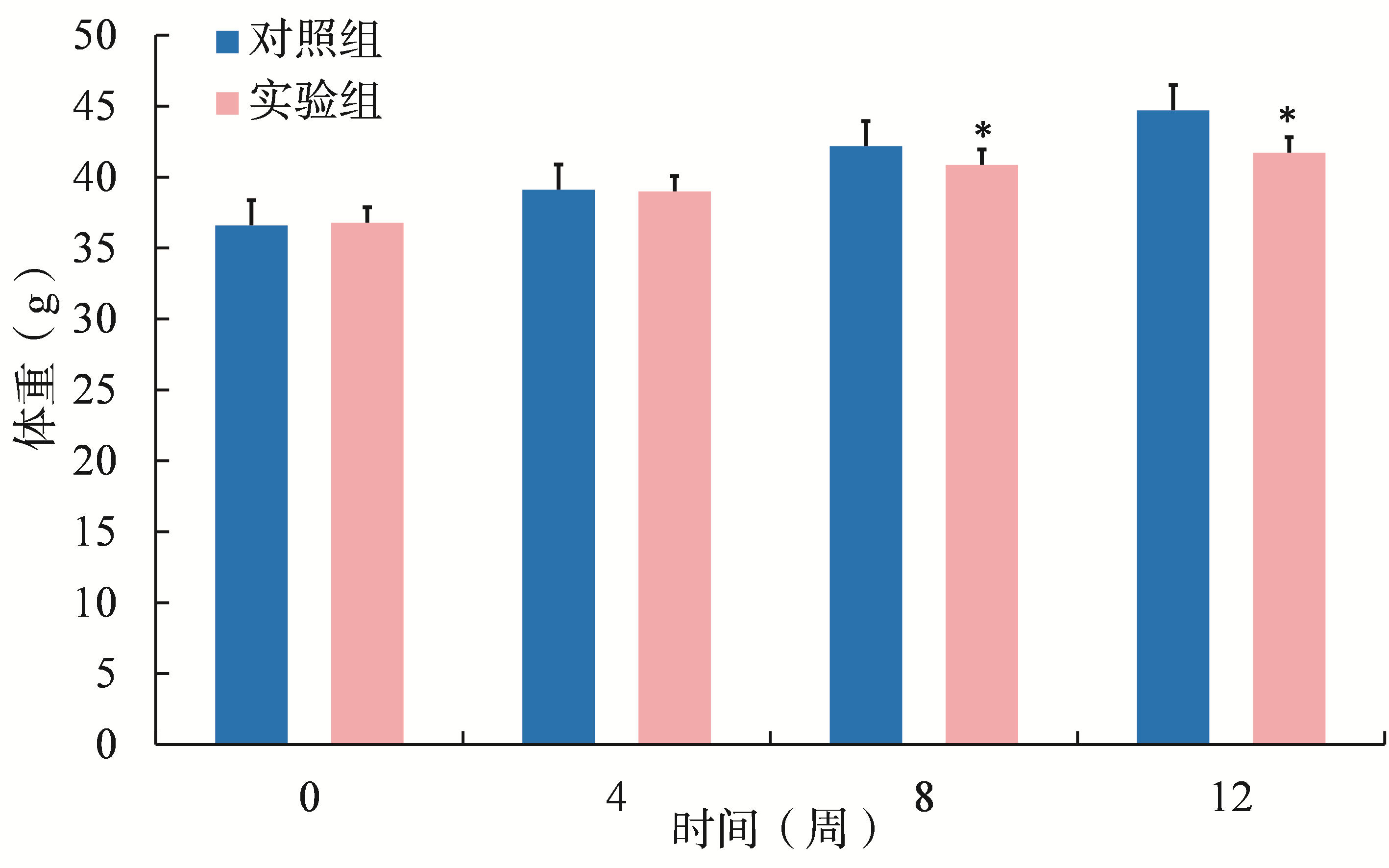
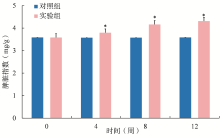
图2
实验组和对照组小鼠脾脏指数的动态变化 注:*表示实验组与对照组比较差异有统计学意义。
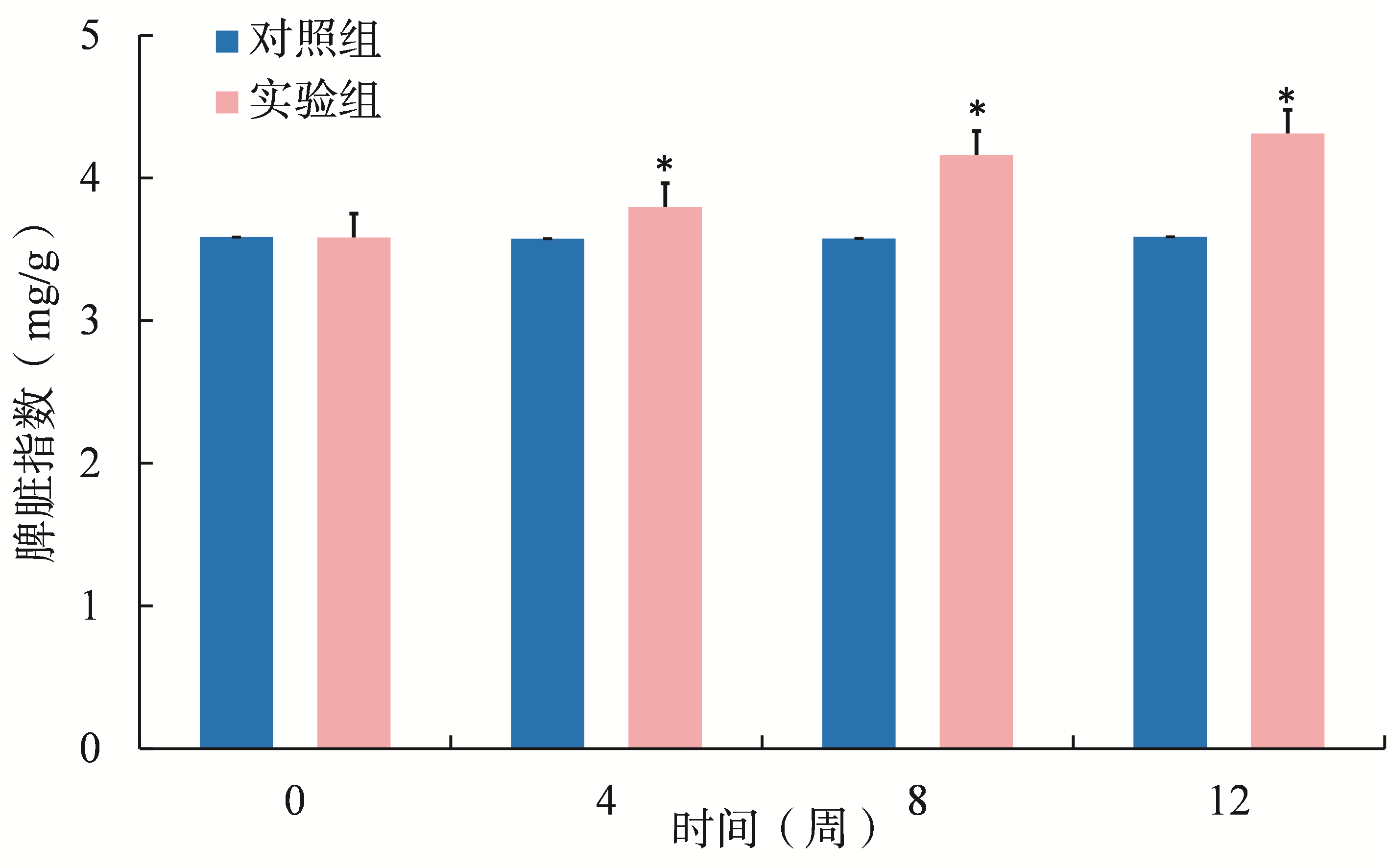
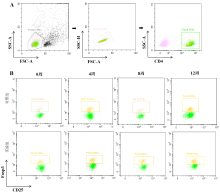
图3
ESA免疫小鼠脾Tregs的动态变化 注:A为CD4+T淋巴细胞圈门;B为在CD4+T淋巴细胞门下两组小鼠脾Tregs的动态变化(CD25+和Foxp3+表示Tregs)。
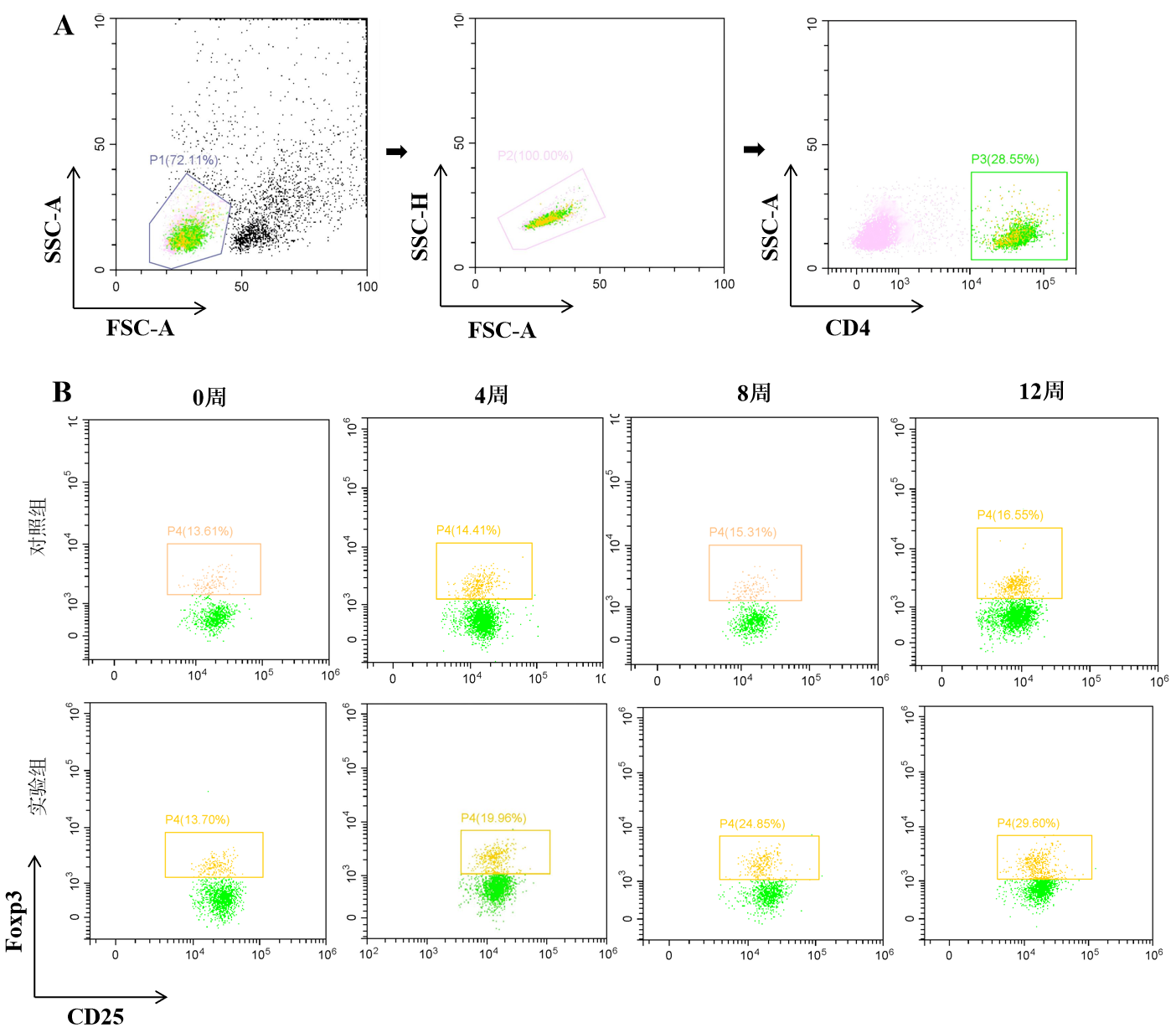
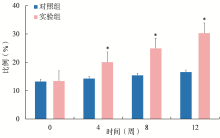
图4
ESA免疫小鼠脾脏Tregs占CD4+T细胞的比例 注:*表示实验组与对照组比较差异有统计学意义。
| [1] | World Health Organization. Schistosomiasis[EB/OL]. [2026-01-10]. https://www.who.int/health-topics/schistosomiasis#tab=tab_1. |
| [2] |
Liu Q, Duan L, Guo YH, et al. Chromosome-level genome assembly of Oncomelania hupensis: the intermediate snail host of Schistosoma japonicum[J]. Infect Dis Poverty, 2024, 13(1):19.
doi: 10.1186/s40249-024-01187-3 |
| [3] |
Lei JH, Feng YJ, Zheng WW, et al. Type Ⅰ/Ⅱ immune balance contributes to the protective effect of AIF-1 on hepatic immunopathology induced by Schistosoma japonicum in a transgenic mouse model[J]. Inflammation, 2024, 47(5):1806-1819.
doi: 10.1007/s10753-024-02010-9 |
| [4] |
Wang CC, Yu TT, Wang YX, et al. Targeting the EP2 receptor ameliorates inflammatory bowel disease in mice by enhancing the immunosuppressive activity of Treg cells[J]. Mucosal Immunol, 2025, 18(2):418-430.
doi: 10.1016/j.mucimm.2024.12.014 URL |
| [5] |
Singer M, Elsayed AM, Husseiny MI. Regulatory T-cells: the face-off of the immune balance[J]. Front Biosci (Landmark Ed), 2024, 29(11):377.
doi: 10.31083/j.fbl2911377 pmid: 39614434 |
| [6] | Cepika AM, Amaya L, Waichler C, et al. Epigenetic signature and key transcriptional regulators of human antigen-specific type 1 regulatory T cells[J]. bioRxiv(preprint), 2024. |
| [7] |
Torres-Martínez L, Morales-Primo AU, Zamora-Chimal J. Indoleamine 2, 3-dioxygenase and tryptophan catabolism: key players in immunosuppression and intracellular parasite survival mechanisms[J]. Immunol Invest, 2025, 54(7):909-934.
doi: 10.1080/08820139.2025.2511079 URL |
| [8] |
Kizilbash N, Suhail N, Alzahrani AK, et al. Natural regulatory T cells increase significantly in pediatric patients with parasitic infections: Flow cytometry study[J]. Indian J Pathol Microbiol, 2023, 66(3):556-559.
doi: 10.4103/ijpm.ijpm_1262_21 URL |
| [9] |
Musaigwa F, Kamdem SD, Mpotje T, et al. Schistosoma mansoni infection induces plasmablast and plasma cell death in the bone marrow and accelerates the decline of host vaccine responses[J]. PLoS Pathog, 2022, 18(2):e1010327.
doi: 10.1371/journal.ppat.1010327 URL |
| [10] |
Perera DJ, Koger-Pease C, Paulini K, et al. Beyond schistosomiasis: unraveling co-infections and altered immunity[J]. Clin Microbiol Rev, 2024, 37(1):e0009823.
doi: 10.1128/cmr.00098-23 URL |
| [11] |
Driciru E, Koopman JPR, Steenbergen S, et al. T cell responses in repeated controlled human schistosome infection compared to natural exposure[J]. Nat Commun, 2025, 16:6827.
doi: 10.1038/s41467-025-62144-8 |
| [12] |
Guérin A, Moncada-Vélez M, Jackson K, et al. Helper T cell immunity in humans with inherited CD4 deficiency[J]. J Exp Med, 2024, 221(5):e20231044.
doi: 10.1084/jem.20231044 URL |
| [13] |
ZhouXX, LuXZ, PanDD, et al. Immunization with the glutathione S-transferase Sj26GST with Chi-CpG NP against Schistosoma japonicum in mice[J]. Microb Pathog, 2024, 195:106847.
doi: 10.1016/j.micpath.2024.106847 URL |
| [14] |
Al-Atiyah R, Verma ND, Tran GT, et al. Cytokines associated with activation of CD4+CD25+Foxp3+T regulatory cells[J]. Int J Mol Sci, 2026, 27(4):2085.
doi: 10.3390/ijms27042085 URL |
| [15] |
Wang Y, Li JZ, Nakahata S, et al. Complex role of regulatory T cells (tregs) in the tumor microenvironment: their molecular mechanisms and bidirectional effects on cancer progression[J]. Int J Mol Sci, 2024, 25(13):7346.
doi: 10.3390/ijms25137346 URL |
| [16] |
Zaccone P, Burton O, Miller N, et al. Schistosoma mansoni egg antigens induce Treg that participate in diabetes prevention in NOD mice[J]. Eur J Immunol, 2009, 39(4):1098-1107.
doi: 10.1002/eji.200838871 pmid: 19291704 |
| [17] |
Cardoso LS, Oliveira SC, Góes AM, et al. Schistosoma mansoni antigens modulate the allergic response in a murine model of ovalbumin-induced airway inflammation[J]. Clin Exp Immunol, 2010, 160(2):266-274.
doi: 10.1111/j.1365-2249.2009.04084.x pmid: 20132231 |
| [18] |
Yang JH, Zhao JQ, Yang YF, et al. Schistosoma japonicum egg antigens stimulate CD4 CD25 T cells and modulate airway inflammation in a murine model of asthma[J]. Immunology, 2007, 120(1):8-18.
doi: 10.1111/imm.2007.120.issue-1 URL |
| [19] | 王玲玲, 李皓, 廖瑶, 等. 日本血吸虫感染小鼠脾脏CD3+CD4+CD25+Foxp3+Treg细胞及其亚群的动态变化[J]. 热带医学杂志, 2020, 20(3):314-318,345,封2. |
| [20] |
Lin W, Szabo C, Liu T, et al. STING trafficking activates MAPK-CREB signaling to trigger regulatory T cell differentiation[J]. Proc Natl Acad Sci USA, 2024, 121(29):e2320709121.
doi: 10.1073/pnas.2320709121 URL |
| [21] |
Sun XQ, Mu QQ, Zhou BY. The TPx protein of Taenia solium metacestode regulates Treg and Th17 cell differentiation via the TGF-β/Smad signaling pathway[J]. Front Immunol, 2026, 17:1612077.
doi: 10.3389/fimmu.2026.1612077 URL |
| [1] | 胡婷婷, 赵成思, 林树晴, 王桂芳, 邱竞帆, 张戎, 刘新建, 王勇. 日本血吸虫慢性感染诱发小鼠肾脏纤维化的实验研究[J]. 热带病与寄生虫学, 2026, 24(1): 47-53. |
| [2] | 马晓荷, 章乐生, 汪峰峰, 路标, 孙成松, 李清越, 王旗, 操治国, 汪天平. 基于深度学习技术的日本血吸虫抗体检测结果智能判读模型的建立和效能评价[J]. 热带病与寄生虫学, 2024, 22(6): 358-363. |
| [3] | 高洋, 关飞, 雷家慧. 褪黑素在感染性疾病治疗中的作用机制[J]. 热带病与寄生虫学, 2024, 22(5): 315-320. |
| [4] | 王旗, 章乐生, 汪峰峰, 汪敏, 王毓洁, 马晓荷, 李清越, 操治国. 日本血吸虫成虫和虫卵排泄分泌抗原对Ⅰ型糖尿病模型小鼠的影响[J]. 热带病与寄生虫学, 2024, 22(4): 239-243. |
| [5] | 李宗光, 何婷婷, 谢婧姿, 吕尚标, 胡飞, 袁敏, 林丹丹, 李宜锋. 江西省血吸虫性肝纤维化人群流行病学特征分析[J]. 热带病与寄生虫学, 2024, 22(1): 31-36. |
| [6] | 马晓荷, 汪敏, 朱磊, 郭见多, 李清越, 刘婷, 翟杜娟, 孙成松, 张世清, 汪天平. 安徽省不同地区日本血吸虫群体线粒体基因遗传变异研究[J]. 热带病与寄生虫学, 2021, 19(5): 254-. |
| [7] | 金郁, 刘道华, 金伟, 呼明闯, 汪奇志. IL-10 调节日本血吸虫感染小鼠肝脏炎症和纤维化的实验观察[J]. 热带病与寄生虫学, 2021, 19(5): 259-. |
| [8] | 陈舒心, 秦铭, 周方斌, 何兴. 日本血吸虫与曼氏血吸虫的致病差异[J]. 热带病与寄生虫学, 2021, 19(2): 112-115,封三. |
| [9] | 白杨, 雷家慧, 关飞. IL-33/ST2信号通路在肝脏疾病中的作用及其机制的研究进展[J]. 热带病与寄生虫学, 2021, 19(1): 41-46. |
| [10] | 詹惕, 崔代文, 项可霞, 汪为春, 朱应富, 段永梅. 安徽马鞍山市博望区“有螺无病”成因调查分析 [J]. 热带病与寄生虫学, 2020, 18(2): 115-117. |
| [11] | 张世清, 章乐生, 汪峰峰, 汪天平 . 《日本血吸虫抗体检测 间接红细胞凝集试验》 (WS / T 630-2018)标准解读[J]. 热带病与寄生虫学, 2020, 18(1): 1-4. |
| [12] | 徐桂娜 何雪梅 周晓蓉 曾凡胜 秦志强. 日本血吸虫虫卵分泌物小 RNA的高通量测序[J]. 热带病与寄生虫学, 2019, 17(4): 210-213. |
| [13] | 卢美 邹翔 万圣 杨瑞军 杜海娟 张剑锋. 浙江开化县应用LAMP技术检测感染性钉螺的效果分析[J]. 热带病与寄生虫学, 2019, 17(4): 229-232. |
| [14] | 田添,王培,吕超,秦志强. 日本血吸虫脂筏蛋白的重组表达及其生物信息学分析[J]. 热带病与寄生虫学, 2018, 16(2): 67-. |
| [15] | 曾凡胜,何露,何雪梅,杨杰,秦志强. 日本血吸虫巢式PCR检测方法的建立[J]. 热带病与寄生虫学, 2017, 15(3): 136-. |
| 阅读次数 | ||||||
|
全文 |
|
|||||
|
摘要 |
|
|||||
